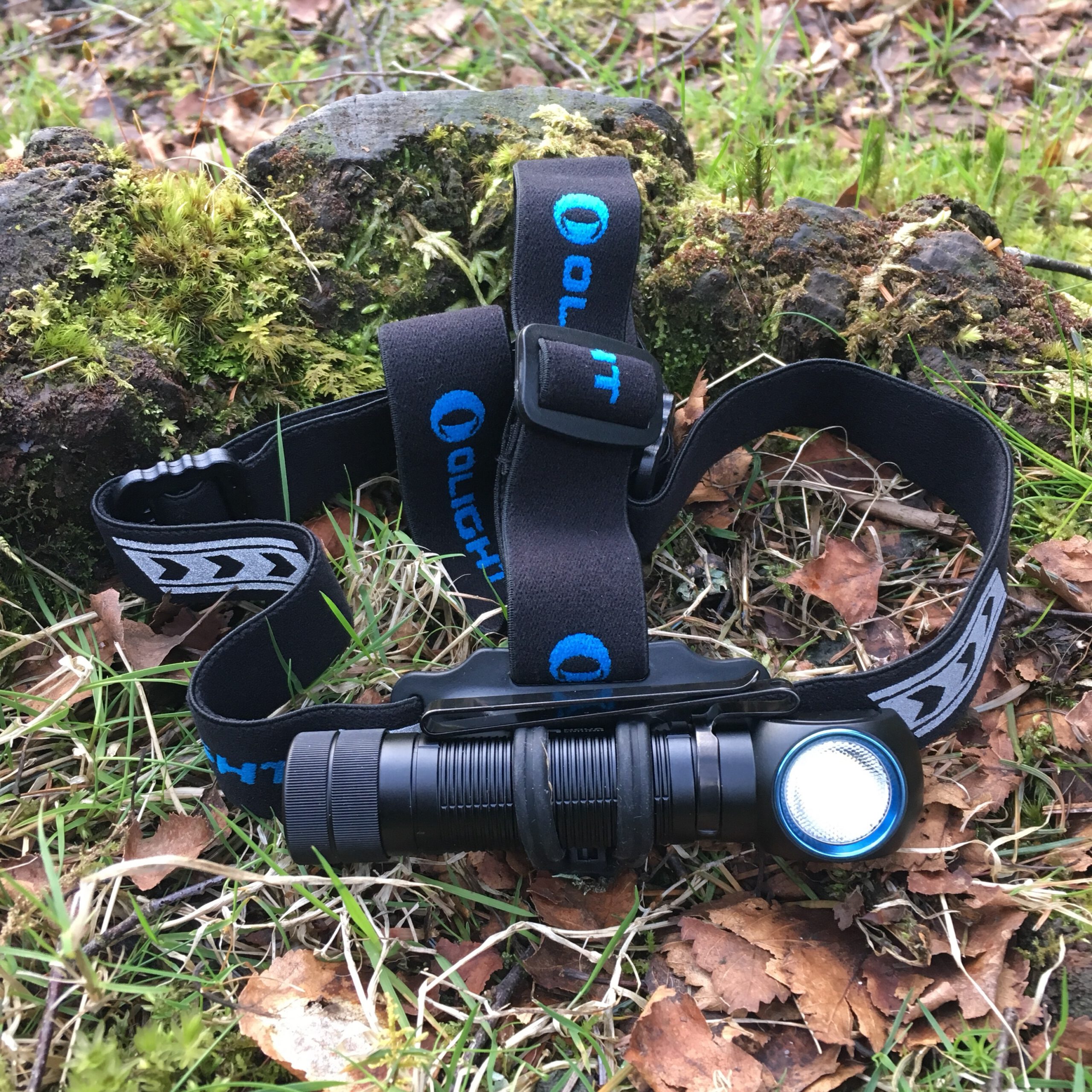
There are some really cool new headtorches on the market, chief among them are flashlights made by a company called Olight. Back in Spring 2018, I was fortunate to be sent two of their headtorches to try out: the Olight H1R and H2R Nova. With rechargeable batteries, high levels of brightness and a delightful build quality, they go way beyond the simple plastic triple-A battery headtorches I’ve been using for years. I’ve been so impressed with them that I’ve partnered up with Olight to sell them through the Apsen website.

Here’s a summary of the technical specs of each headtorch:
| HR2 headtorch | HR1 headtorch | |
| Weight and size | Baton baton-shaped flashlight is 110mm long and 100g in weight | Baton baton-shaped flashlight is 61.5mm long and 51.5g in weight |
| Head strap | The head torch comes with a head strap with a magnetic mount. The flashlight and be detached from the magnetic mount by unclipping a silicon strap. | |
| Clip | Dual-sided metal clip for attachment to a rucksack or garments | Single-sided clip for attachment to a rucksack or garments |
| Rechargeable battery | 3000mAh rechargeable battery giving illumination for up to 45 days in moonlight mode. | 650m Ah rechargeable battery gives illumination for up to 6 days in moonlight mode. |
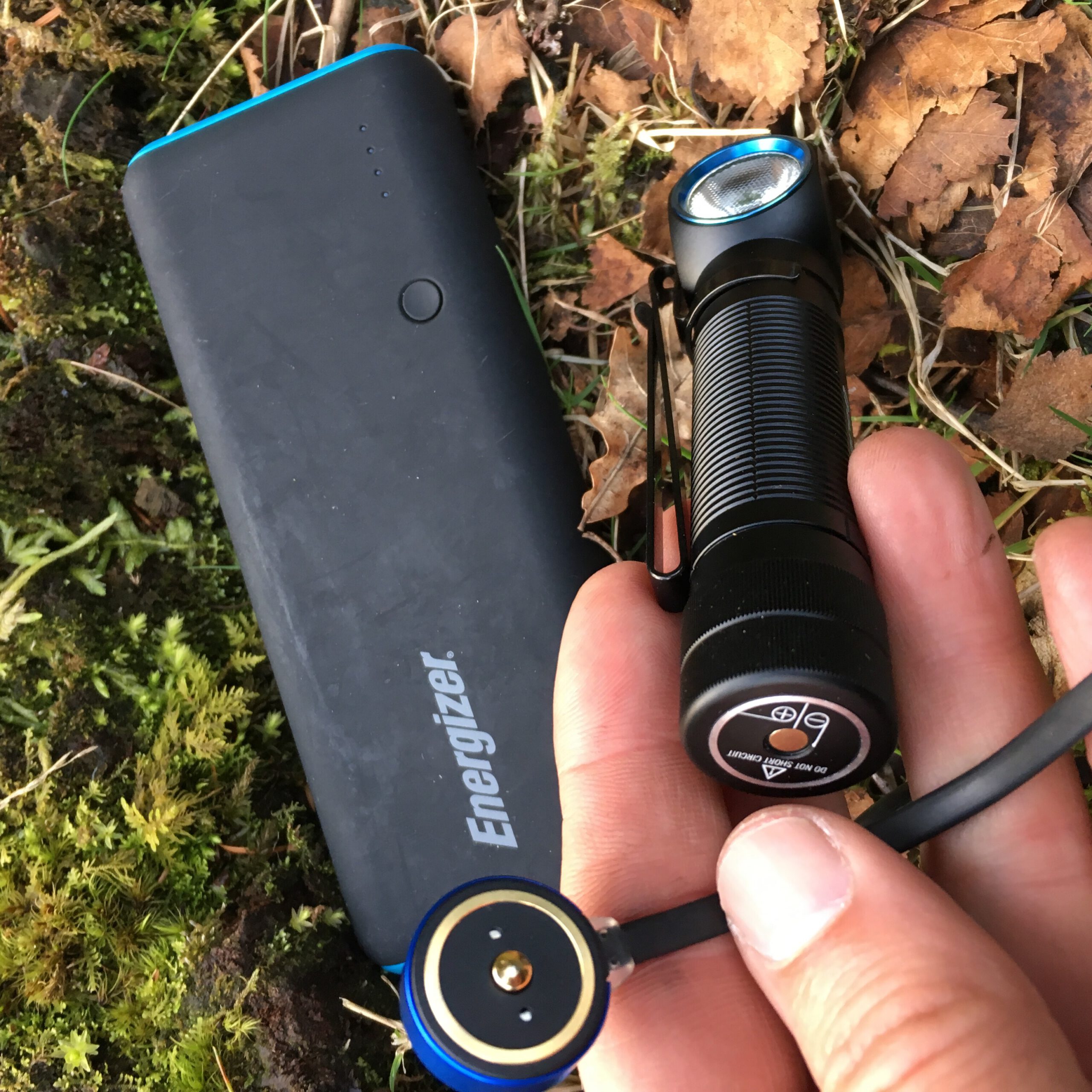
| Tailclip | The flashlight has a magnetic USB charging cable that attaches to a magnetic tail clip at the bottom of the baton. A small light on the cable turns from red to green to indicate that the battery is fully charged. | |
| Illumination | Moonlight (1 lumens, lasting 45 days); Low (30 lumens, lasting 50 hours); Medium (150 lumens, lasting 10 hours); High (600 lumens, lasting 2.5 hours); Turbo (2300 lumens decreasing to 750 lumens over 1 hour 50min) | Moonlight (1 lumens, lasting 6 days); Low (15 lumens, lasting 20 hours); Medium (60 lumens, lasting 5 hours); High (180 lumens, lasting 1 hr 40 min); Turbo (600 lumens decreasing to 180 lumens over 1 hour 20min) |
| SOS | The flashlight can be switched to an SOS setting | |
| Lockout | The flashlight can be set to lockout mode, which means that, should the end button be accidentally depressed inside your rucksack, it won’t come on and drain the battery. | |
| Waterproof | The flashlight has a waterproof rating of IPX8 (immersion in 1m of water) | |
Here are the features I like best about the headtorches:
Build Quality: The aluminium casing of the flashlights is tough, robust and waterproof. The headtorches also come with a five-year guarantee. The HR1 is delightfully small and compact at only 61.5mm long and 51.5g. The HR2 is twice the weight, but you benefit from a longer battery life and more illumination.
Rechargeable battery: No more throwing away single-use batteries. For a few hours of nighttime walking, the batteries have plenty of power to last and if you set the illumination to a low level, the rechargeable battery will last through a multiday camping or bothy trip. Should the battery level get low, the flashlight forewarns you and begins to blink. With its USB charging cable, it can also be recharged in the field using a power bank. I also like the lockout mode, which prevents the battery from being drained if it gets switched on by accident in your rucksack.
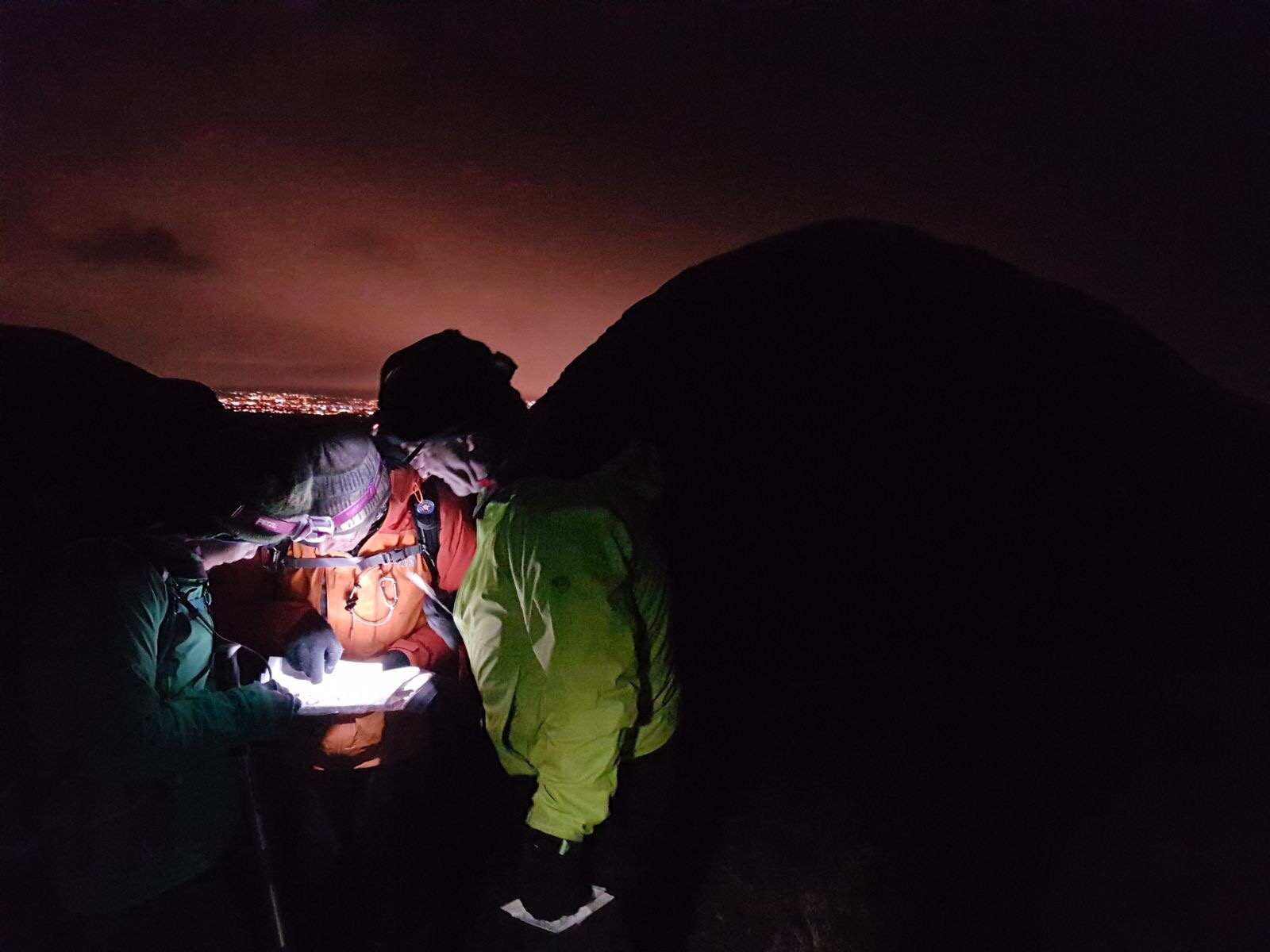
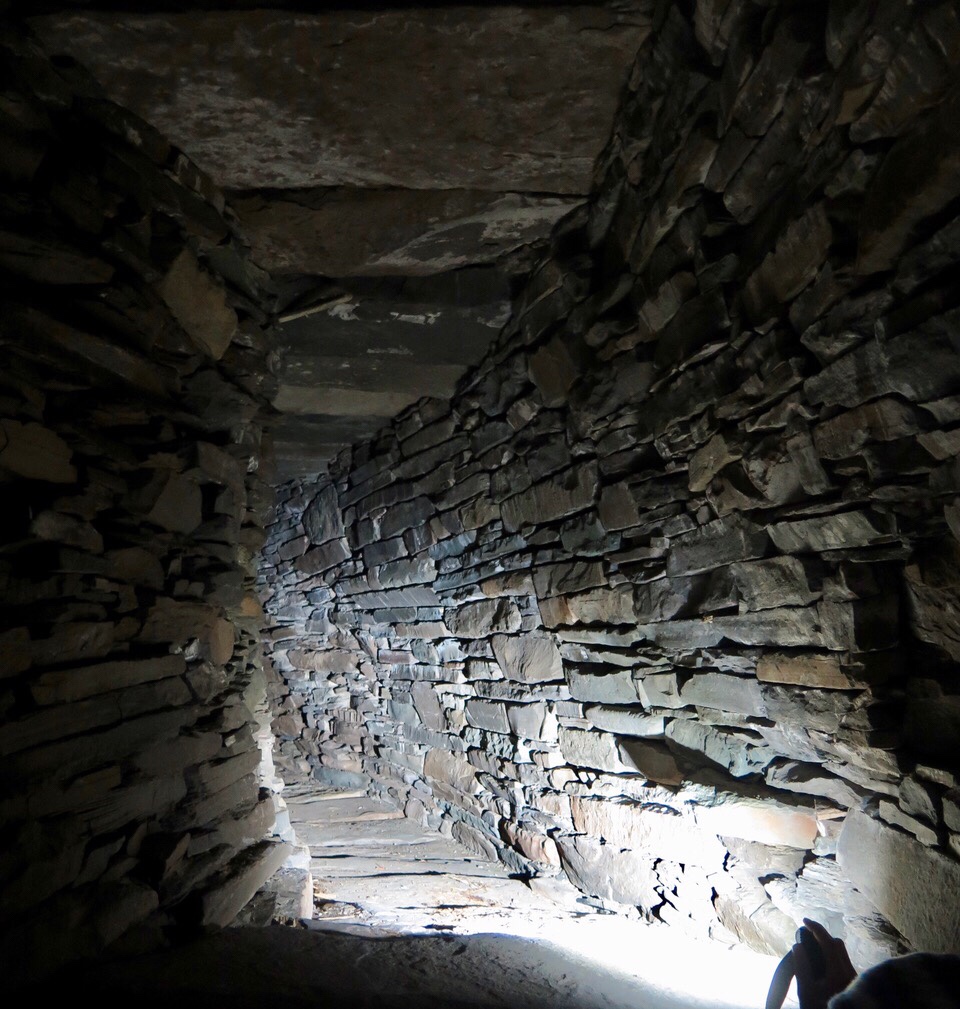
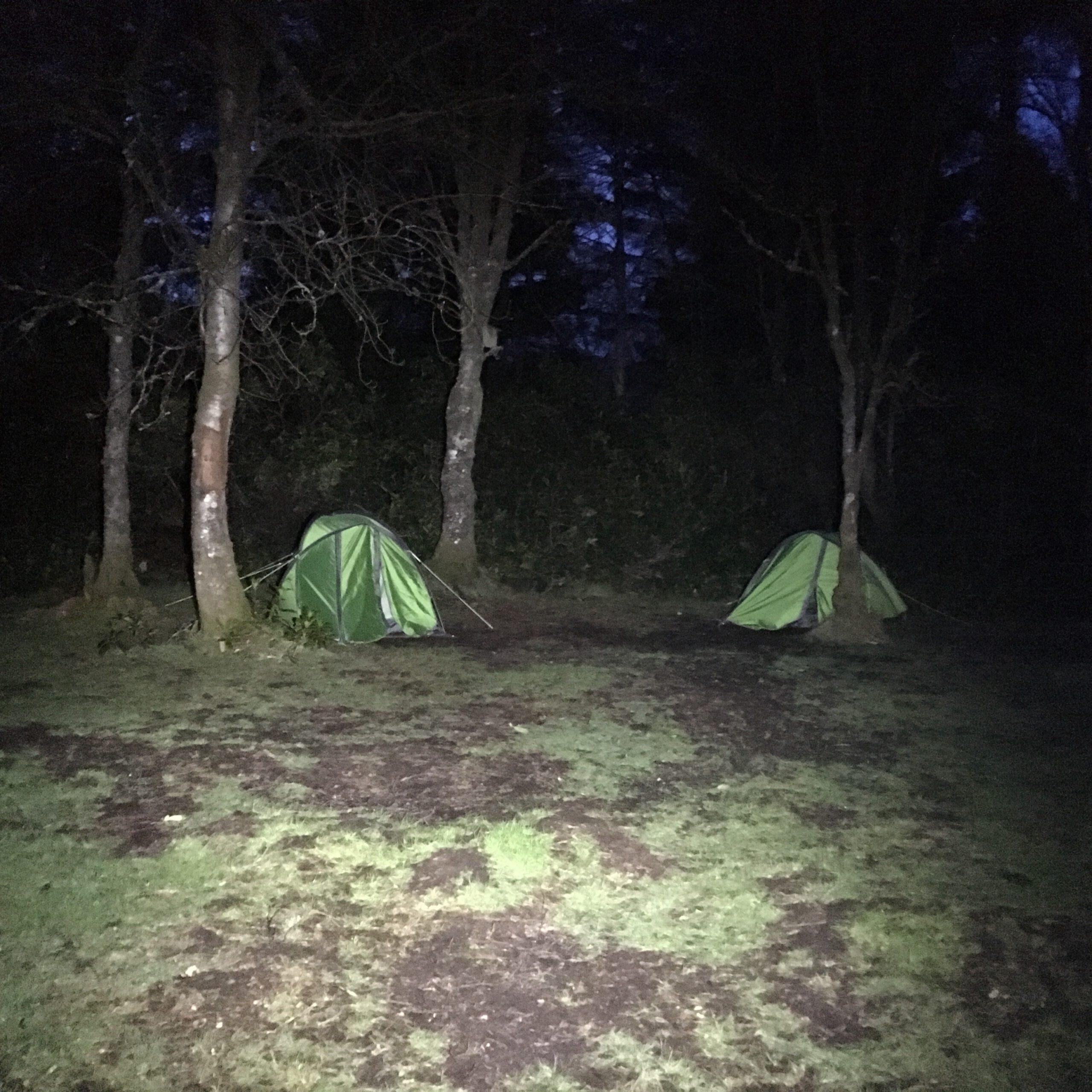
Variable illumination: The brightness level goes from 1 lumens to 600 and 2300 lumens, respectively, for the H1R and H2R. I have never had a flashlight with a brightness of more than 30 lumens and I was sceptical at first whether I would find it useful. Within a short time of using them, however, the benefits of being able to illuminate a campsite or bothy you’ve been navigating to at night have been very evident. The bright settings have also come in useful when illuminating some of the ancient monuments I take clients to: like the dark passageways of brochs and chambered cairns in Orkney and Shetland. The low light settings, like the Olight’s 1 lumen moonlight mode, are equally important when navigating, helping to reduce glare when reading a map and prevent dazzling your hiking buddies.
 Things to watch out for…
There aren’t many downsides to these headtorches, but there are a few things to watch out for. The base of the baton flashlight and the headstrap mount arte magnetic. Be mindful that you shouldn’t place your compass anywhere near these magnets: there is a risk that you could reverse the polarity of your compass. It is also important to remember to switch the flashlight to lockout mode before storing it away in your rucksack. If you don’t, there is a risk that the on button will get knocked on and the torch will lead to the battery draining and also melting the lens of the flashlight. Lastly, do take care because these head torches are very, very bright and will easily dazzle people around you.