I’ve just returned from guiding a walking tour in Shetland (August 2024). Every year we run several, open, week-long holidays to the islands for anyone to book onto. This blog post lists some of the common, and not so common, birds one sees on the islands. It isn’t complete yet. Over time we’ll add to it, as we get more good photos. On this last tour, my good friend Murray Wilson came along. A very keen birder and photographer, this was his first visit to the islands. Most of the photos are Murray’s, taken this August. Other wildlife pictures by Murray can be found here.
Arctic Skua (Skooty Alin) Stercorarius parasiticus – Arctic Skuas are darkly coloured birds with pale tips at the end of their wings. They are known to chase other birds into the sky, making the other bird drop its food so the arctic skua can steal it. They are sea birds that only come to solid ground for breeding and are extremely protective of their land and nests.

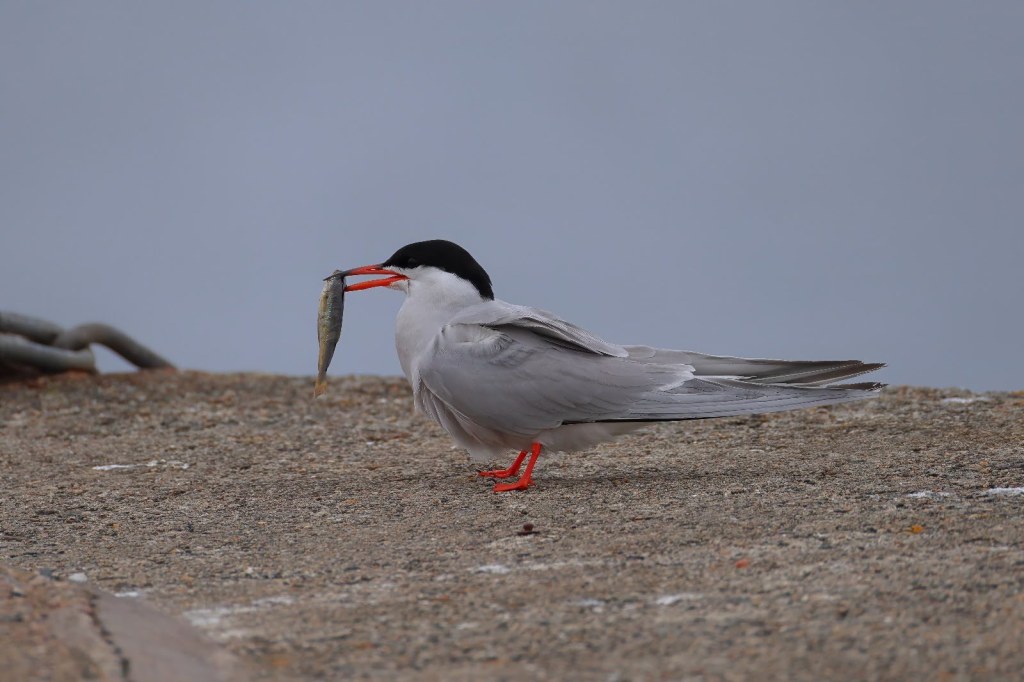
Arctic Tern (Tirrick) Sterna paradisaea – These birds are easily recognisable by their long tail feathers and black cap, which stands out against its otherwise white and light grey feathers. They rely on fish for food, so fish shortages can have negative affects on them. Arctic Terns have the longest migration out of all the birds in the world. Every year they fly between the UK and Antarctica.
Black Guillemot (Tystie) Cepphus grylle – As the name suggests this bird is all Black in colour, apart from a patch of white on its wings. Despite its monochrome appearance, when a Black Guillemot is standing, it reveals its colourful red feet to the world. These birds usually appear on their own or in pairs, inhabiting small islands that are free from human interference.

Black Throated Diver Gavia arctica – This bird is grey, black and white, often with white stripes along its neck and back. It dives into the water from surface level, tucking its wings in tight and using its feet to kick down into the depths, in search of food. However, these powerful kicking legs are not so useful to it when out of water, as it struggles to walk on land due to their legs being far back on their body.

Curlew (Whaap) Numenius arquata – Curlews have brown feathers, long legs and a beak that curls downwards. It is a wading bird, meaning it walks through shallow water along coasts, searching for any food it can find crawling through the sand. They can normally be found feeding in groups. Curlews move away from beaches for their breeding, but are at risk from farming practices that upset their lands.

Dunlin (Plivver’s Page) Calidris alpina – A smaller wader than a Curlew, the Dunlin is found in coastal areas, where it feeds in large groups. Up to thousands can been seen feeding together in the winter. They change their appearances for their breeding season in summer, changing from brown with a white stomach to brown with a black stomach. This originally tricked early bird watchers into thinking that the Dunlin was a different bird.

Fulmar (Maali) Fulmarus glacialis – Not to be mistaken for a seagull, this bird is white and grey with a chunky looking beak. Fulmars fly out to see to catch food then return, flying up the updraughts to reach their nests. They hatch only one chick (pictured) in their nests on the cliff-face. They defend these nests by spitting at the intruders, leaving them with a horrible smell coating them.

Gannet (Solan Gos) Morus bassanus – Gannets are quite big, with white bodies and dark brown ends to their wings. Their heads have a yellow tinge to them and their eyes are very beady. They hunt by flying high into the air, then plunging down into the water to scoop up an unsuspecting fish. Gannet’s nests can sometimes take up an entire cliff-face, vastly outnumbering any other bird species who dare to nest there as well.

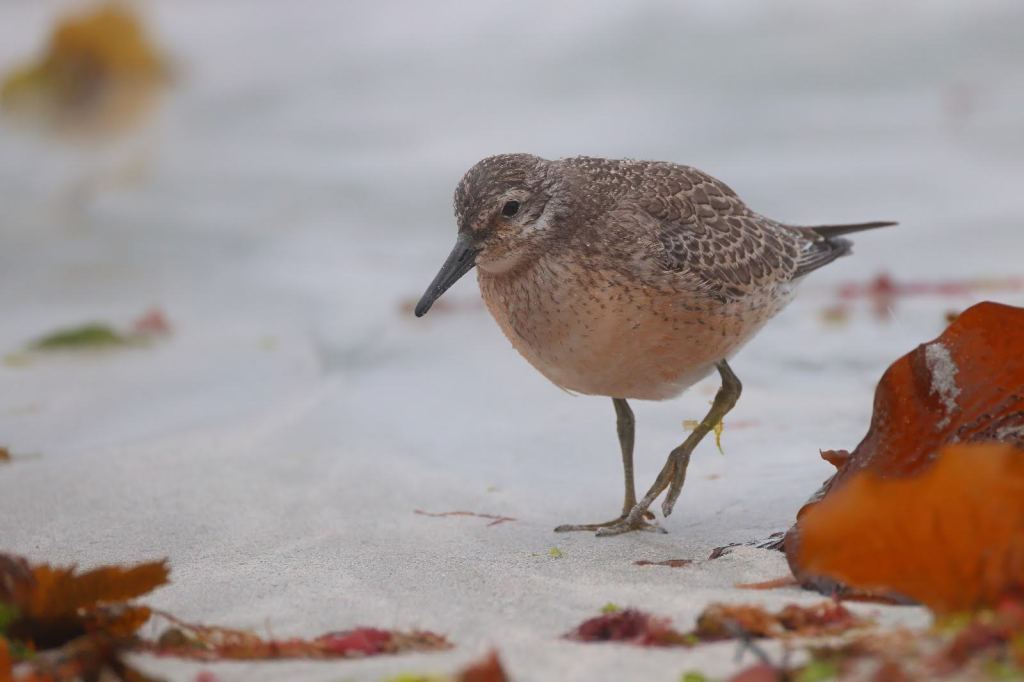
Knot(Red) Calidris canutus – These birds change colour across the seasons. In summer, they are grey-brown on their backs and head with a vibrant orange face, chest and stomach. This orange fades to white as winter approaches, then reappears as the months begin to get warmer again. They are waders and can be seen often in their large groups.
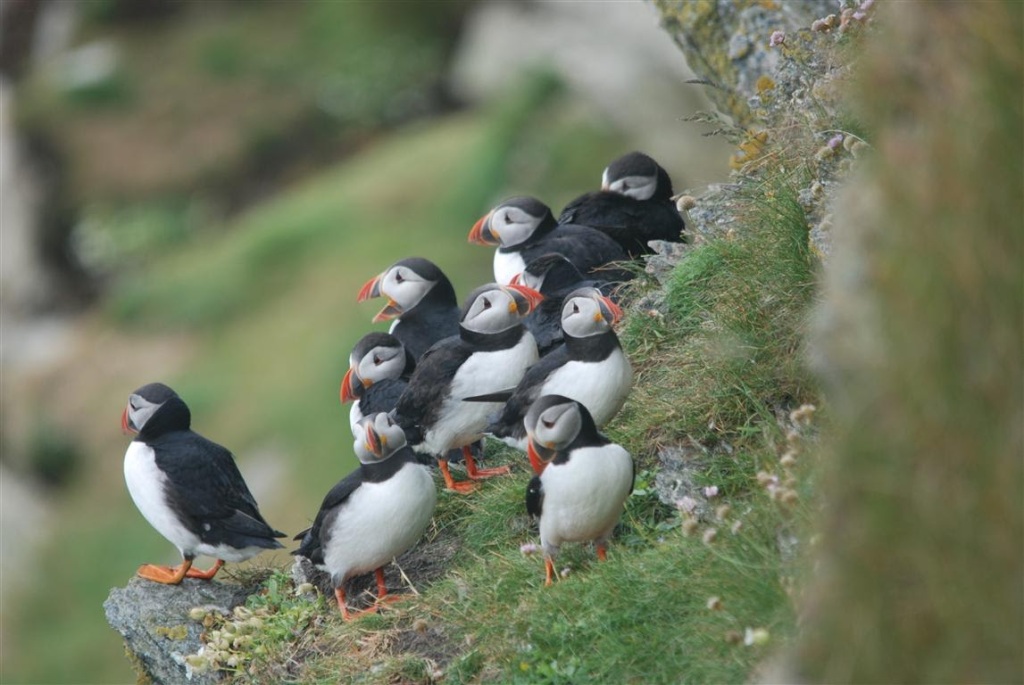
Puffin (Tammy Norrie) Fratercula arctica – Puffins are maybe Shetlands best known bird. They are black and white, with very distinctive bills of orange and yellow. Puffins mainly eat sand-eels and can often been seen with many lined up in their mouths. They live in burrows on hillsides where they make their nests for their young, named Pufflings!
Red Throated Diver (Rain Gos) Gavia stellata – These divers are mainly grey in colour, apart from the bright patch of orange-red on their throat and their matching eyes. Like the Black Throated Diver, they take off from the water surface using their legs to kick. They can spend a minute and a half under the water searching and hunting for food. They live at sea, coming onto their wobbly legs only to breed on land.

Sanderling Calidris alba – Another wader, this bird can run at high speeds up and down beaches, typically to avoid any waves coming in its direction. It is a speckled grey colour with a white stomach. It visit from the arctic, where it has its breeding grounds.

Shetland Wren Troglodytes troglodytes – A subspecies of Wren, the Shetland Wren is larger than those on the central Mainland. Wrens are very small and brown but can be identified easily by their upturned tail. Despite its small stature, it always makes itself known by its loud song.

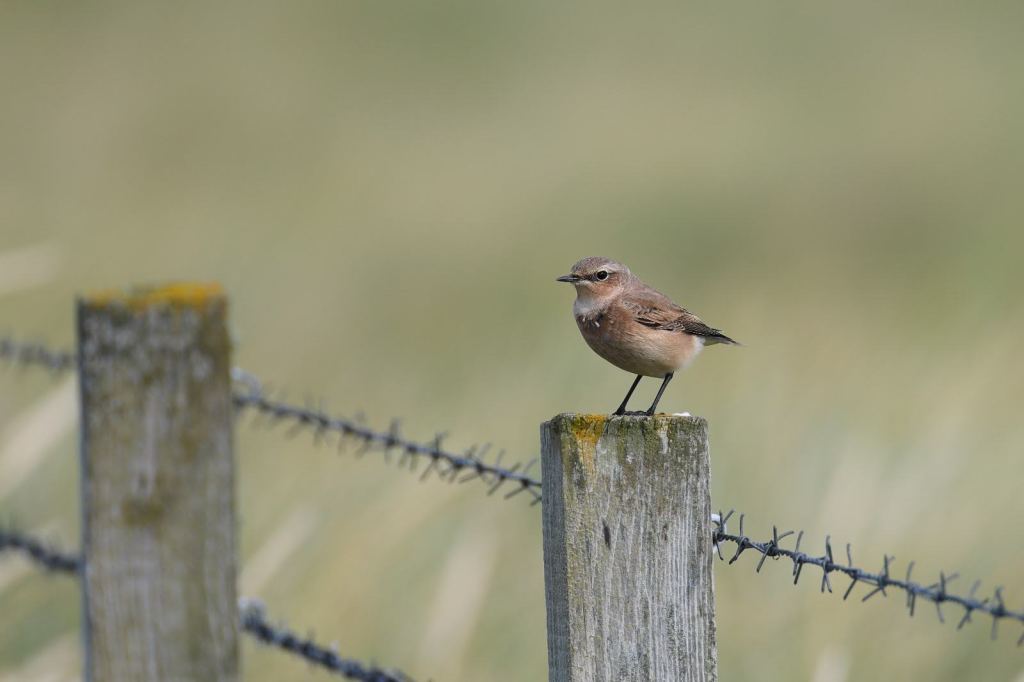
Wheatear (Stanechakker) Oenanthe oenanthe – The male Wheatear is blue-grey, with a white stomach and a large black streak across its face and eye. The female Wheatear (pictured) is light brown-orange with a dark grey stripe over the eye. Both male and female have a bright white rump. They can be seen over the summer and migrate to Africa during for winter.
More photos taken by Murray can be found here.
Uncommon sightings
Lesser Grey Shrike Lanius minor – This small bird was spotted by Murray at Channerwick in South Shetland. This migrant bird appears to have been blown off its course from its usual route, Eastern Europe to Southern Africa.

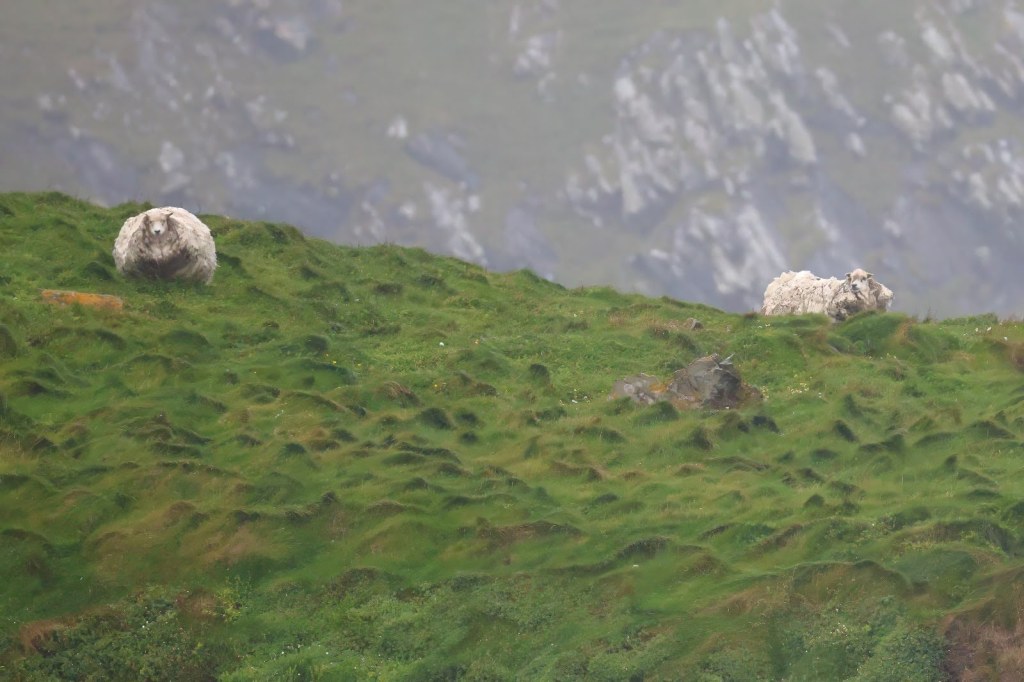
Wild Sheep – These feral sheep were seen stranded on Fugla Stack. I assume that they swam over from a neighbouring island. They have been sighted by me every year for the last six years. They haven’t been attended to by farmers for years, so their wool has grown out due to not being sheared. The overgrown wool has given the sheep such a large appearance, that they can been seen in satellite imaging of the island!!!