In March, trees in Scotland start to come back into leaf. Now’s a good time to study tree buds as they get bigger and begin to open up. Hawthorn and elder are amongst the first, and oak and ash among the last to come into leaf. All of these photos were taken in Mugdock Country Park, just to the north of Glasgow.
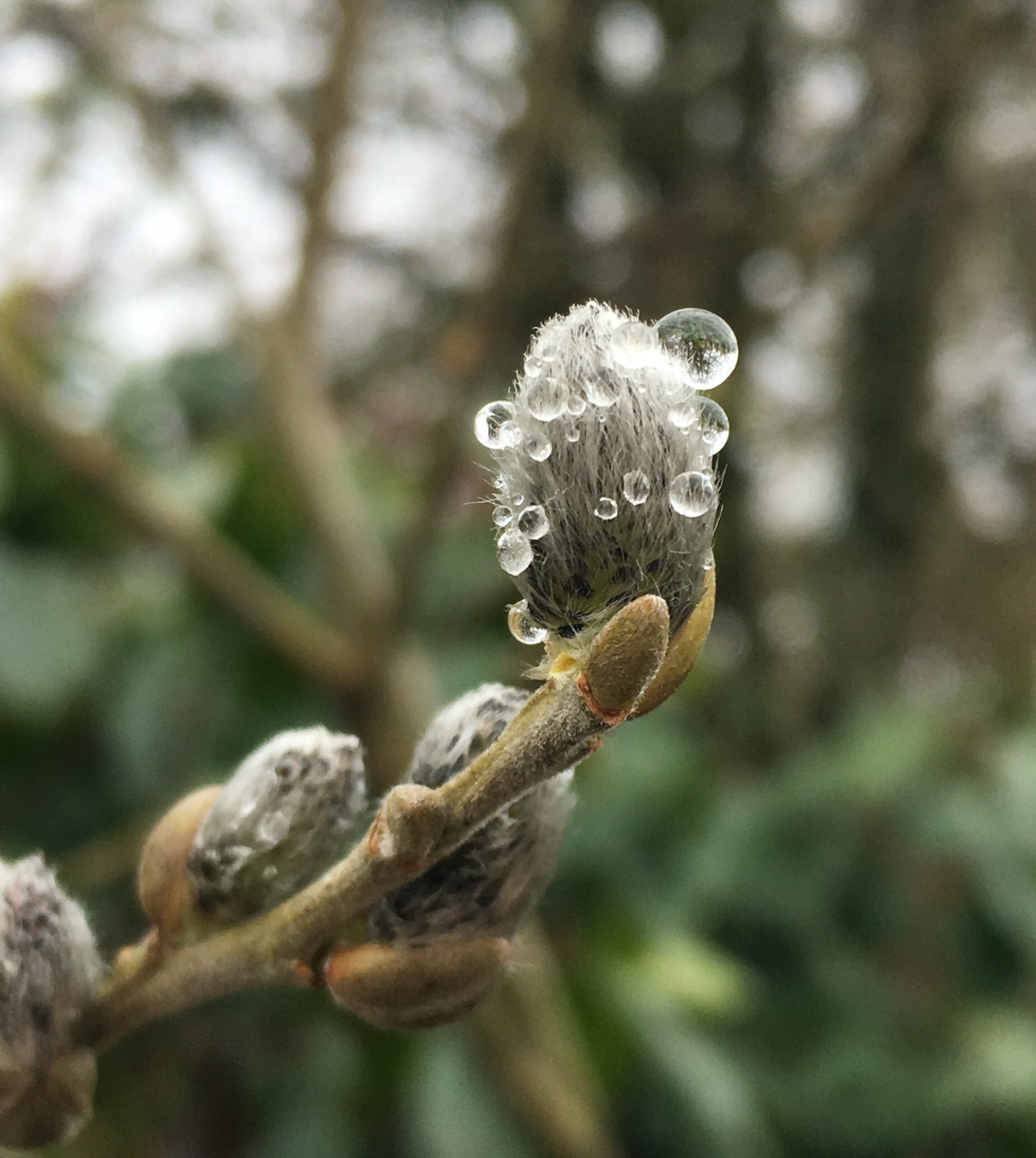
Goat Willow Salix caprea – This type of willow is sometimes called a ‘pussy willow’ after the grey male flowers, which look like cat’s paws. The buds are on alternate sides, are hairless, greenish brown in colour, and pressed close to the twig.

Common Lime Tilia x europaea – Lime tree buds are dark red in colour and on opposite sides of the twig. Notice how the twig branches off at an angle after each bud. Lime trees are very common in parks in Scotland.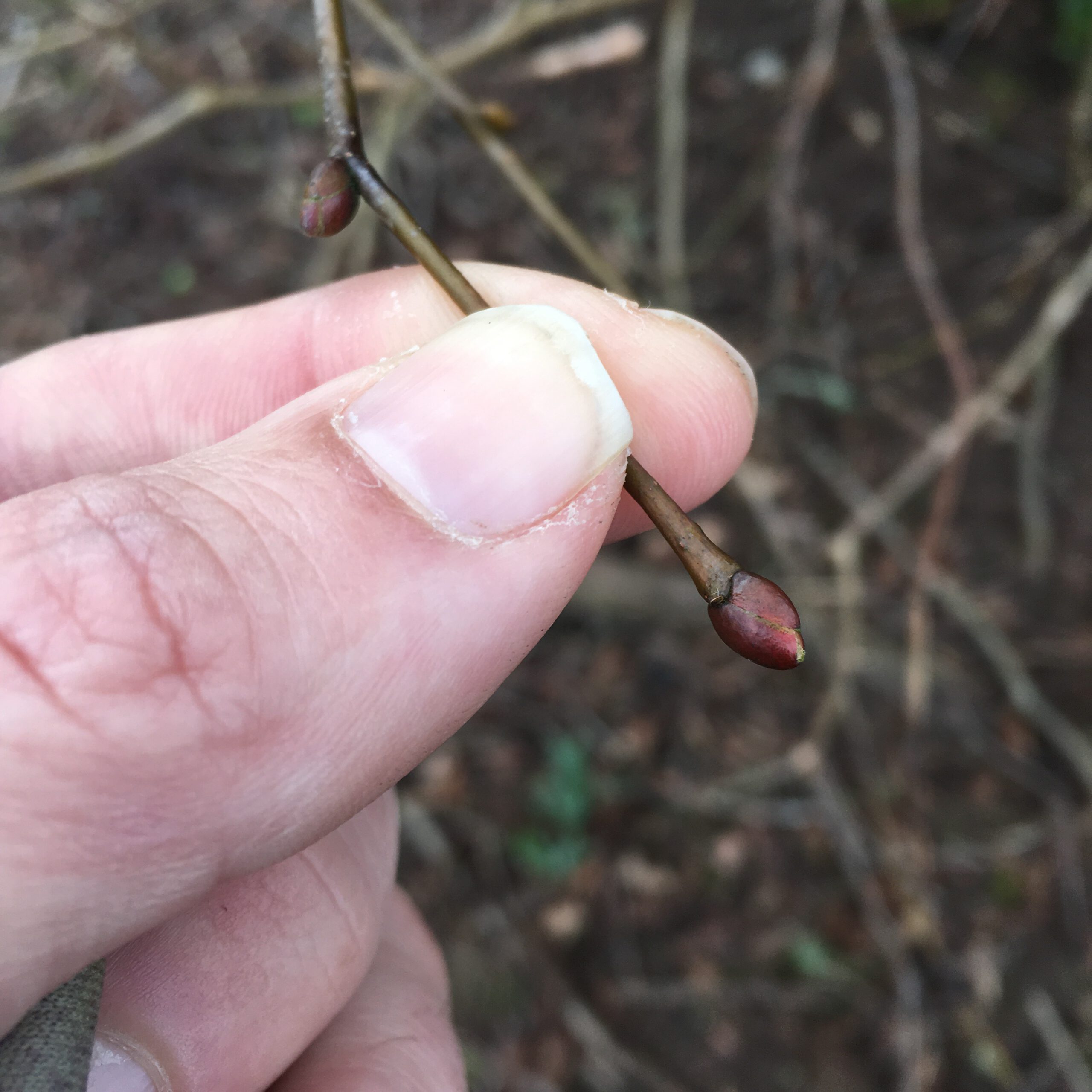
Elder Sambucus nigra – Elder trees are among the first to come into leaf. The buds have a ragged, scruffy look and are dark red in colour. The shape of the tree and its bark are quite distinctive. Young branches grow upright and straight. 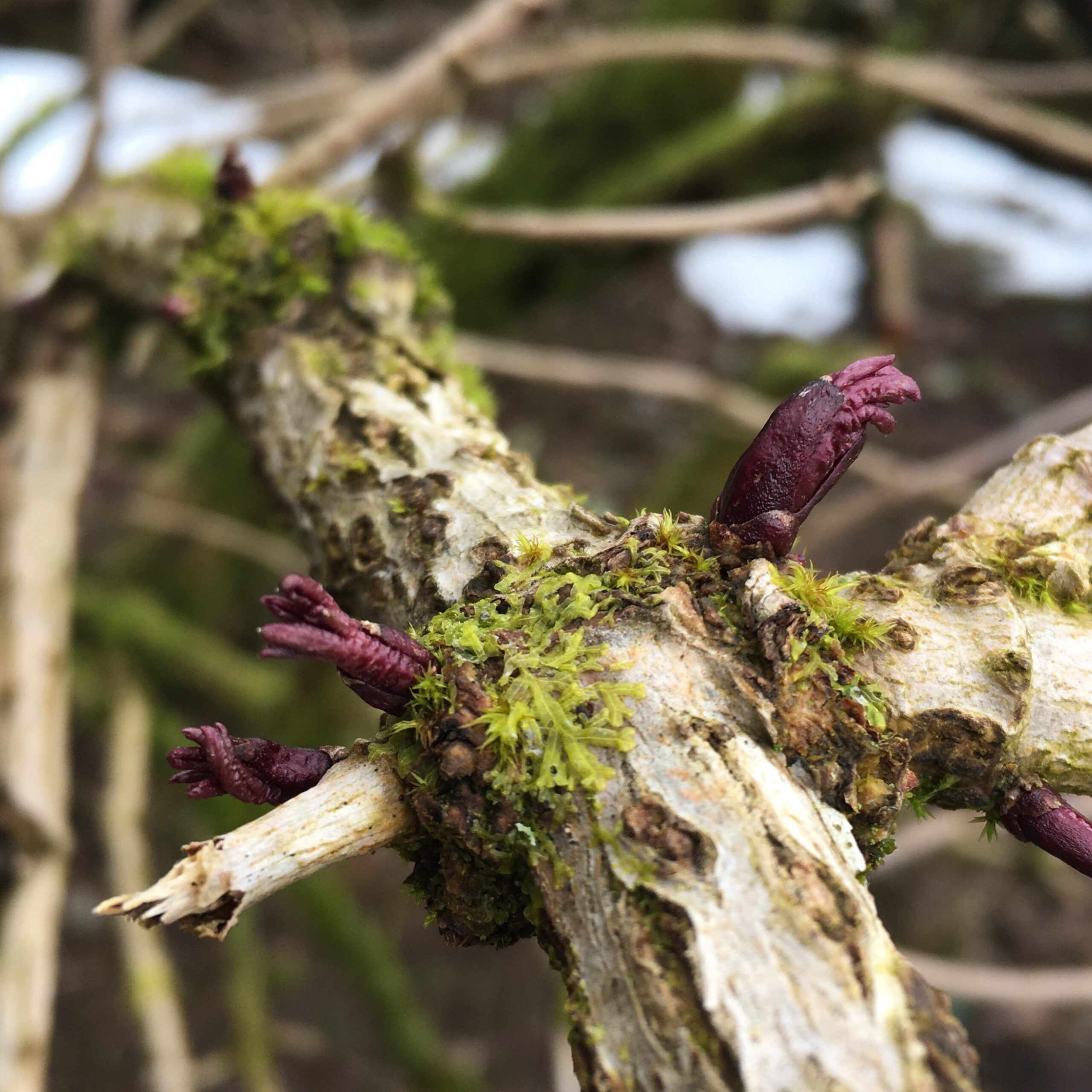
Horse chestnut Aesculus hippocastanum – The buds of a Horse chestnut are large and sticky to the touch. They are brown in colour. Leaf stalks leave a distinctive horseshoe-shaped scar on the twigs. The Horse chestnut is a non-native species in Britain and was introduced from the Balkans in the early seventeenth century. Another theory behind the horse reference in its name is that the Turks used to feed the nuts to their horses.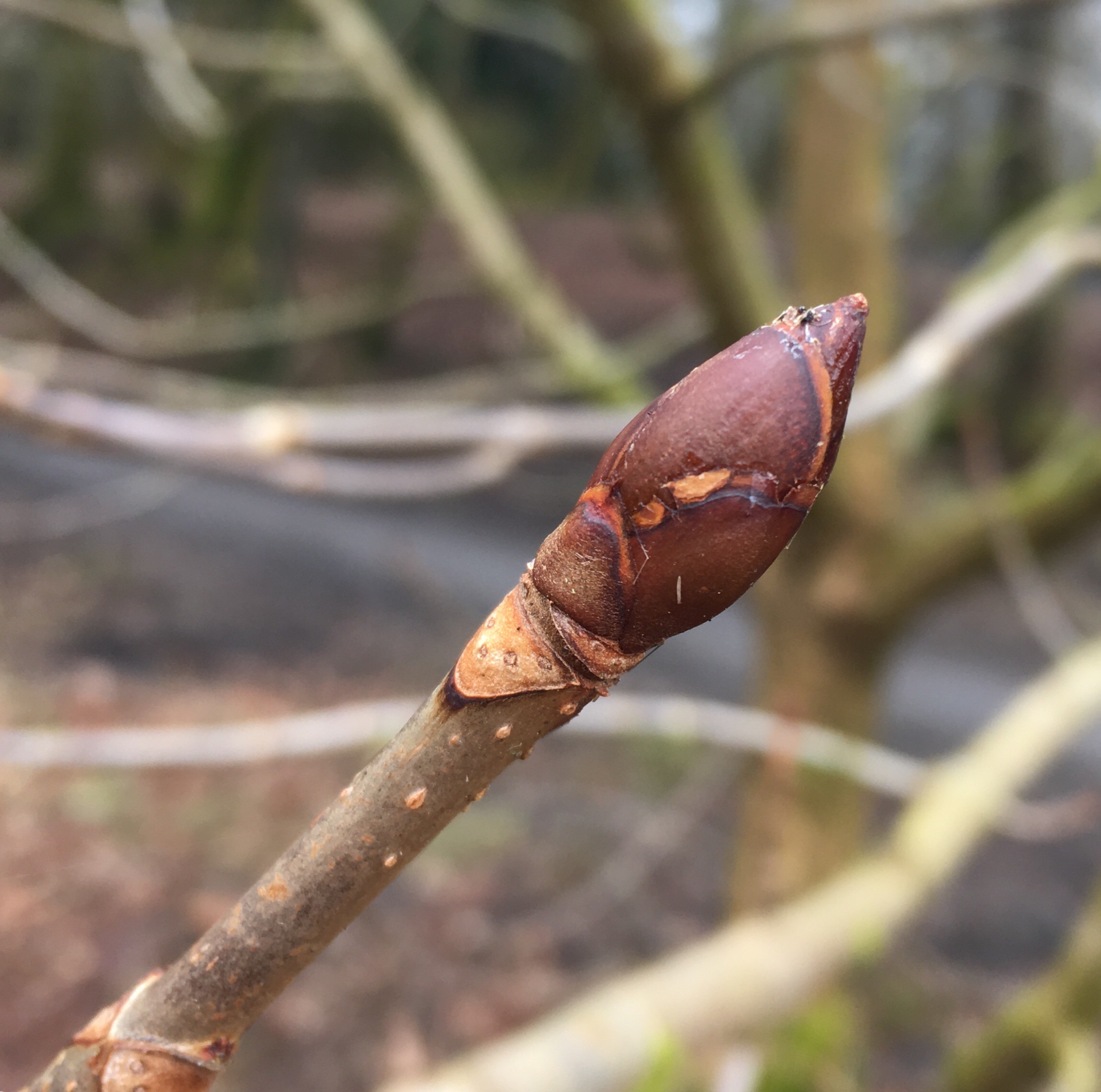

Rowan Sorbus aucuparia – The buds of a Rowan tree have fine grey hairs on them. Below the bud, the twig looks wrinkled like the neck of a turtle. Deer love to browse on Rowan trees.

Sycamore Acer pseudoplatanus – Sycamores are another non-native tree in Britain. The buds are green with scales. I think the buds look a bit like an unripe pineapple. Like the Horse chestnu,t this tree also has distinctive leaf scars on the twigs.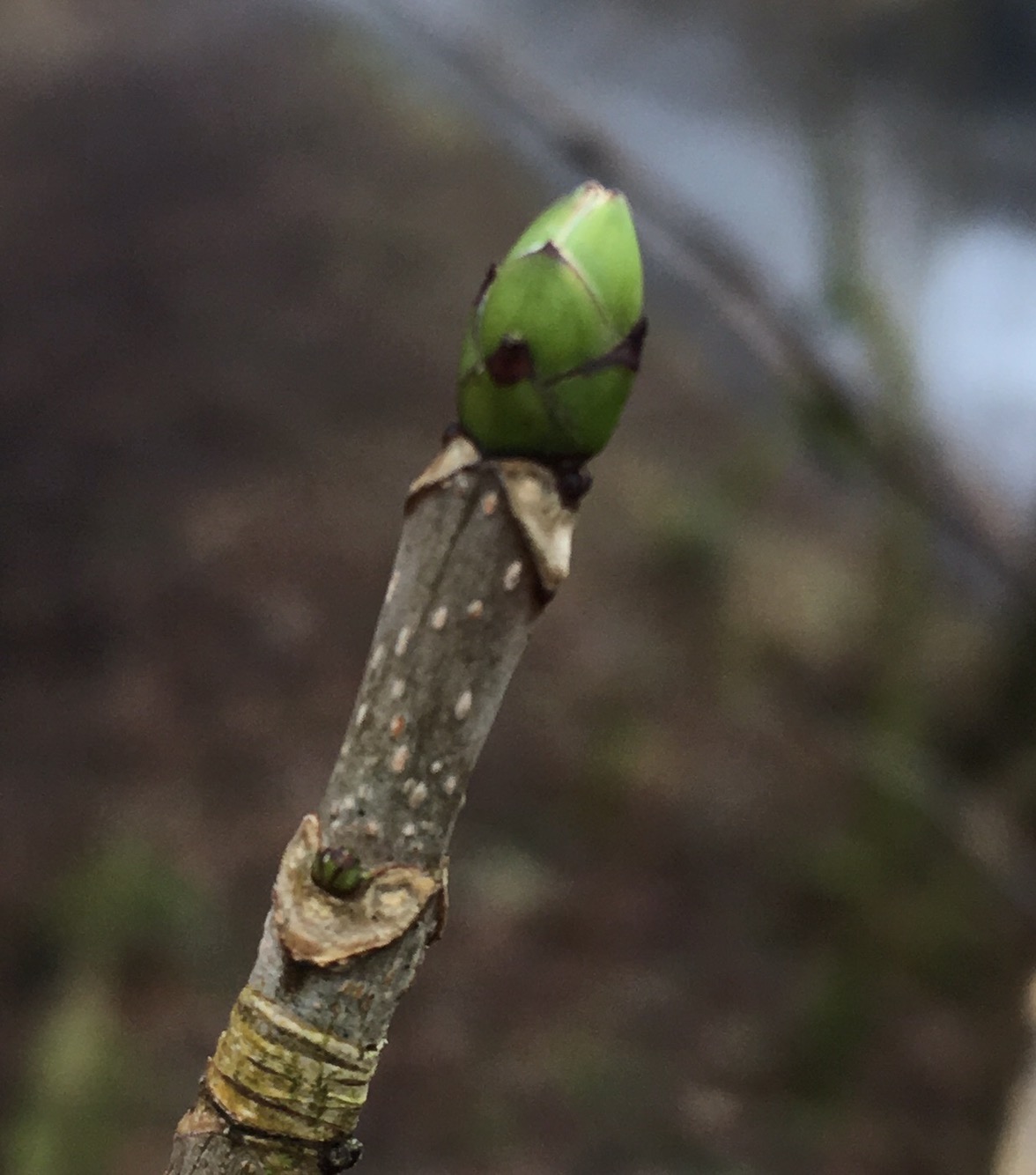
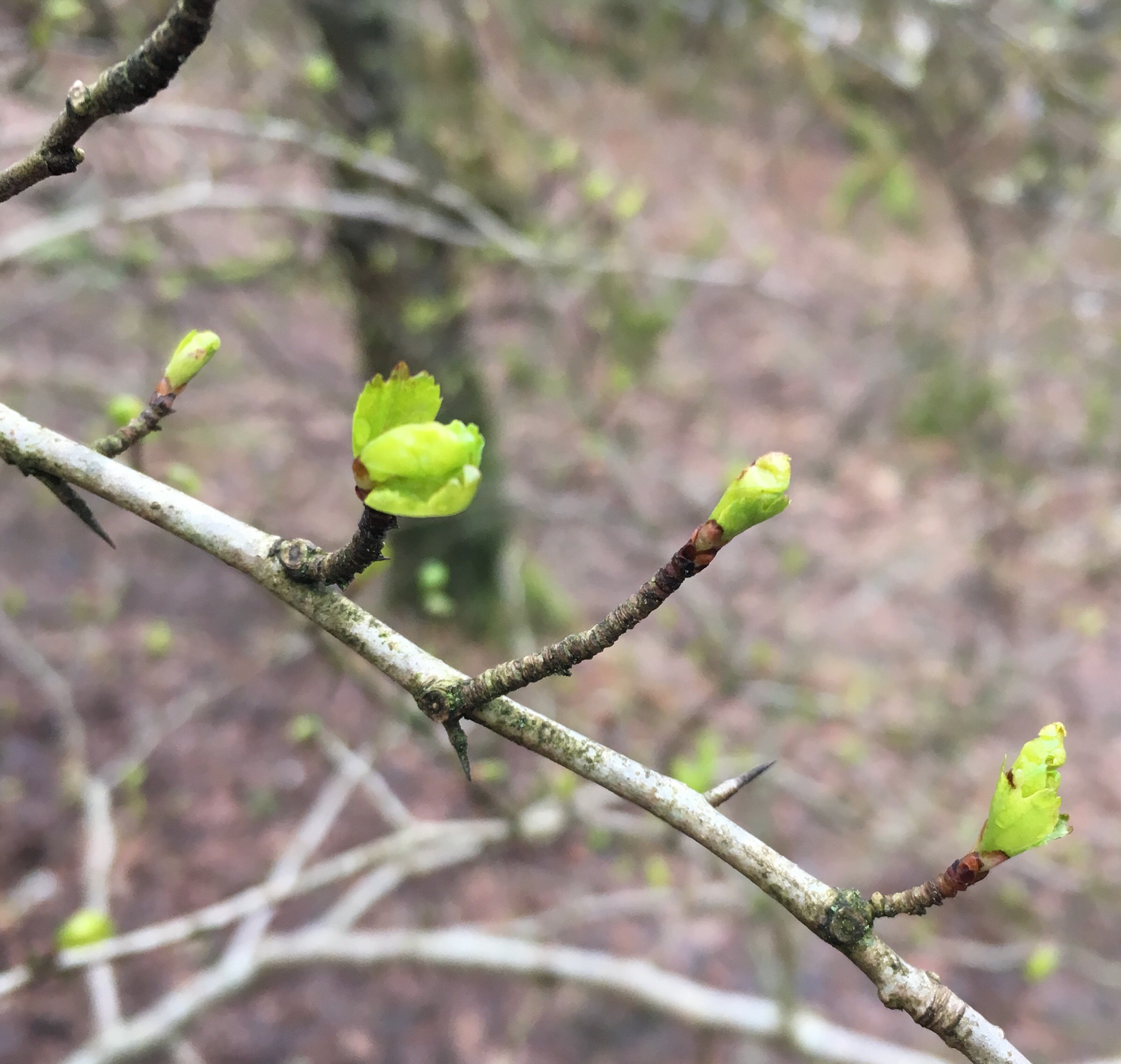
Hawthorn Crataaegus monogyna – Hawthorn buds come into leaf in early spring. The buds are on alternate sides of the twig. The spines grow out from the base of the bud, distinguishing them from blackthorn trees. The new leaves are bright green and are edible. 
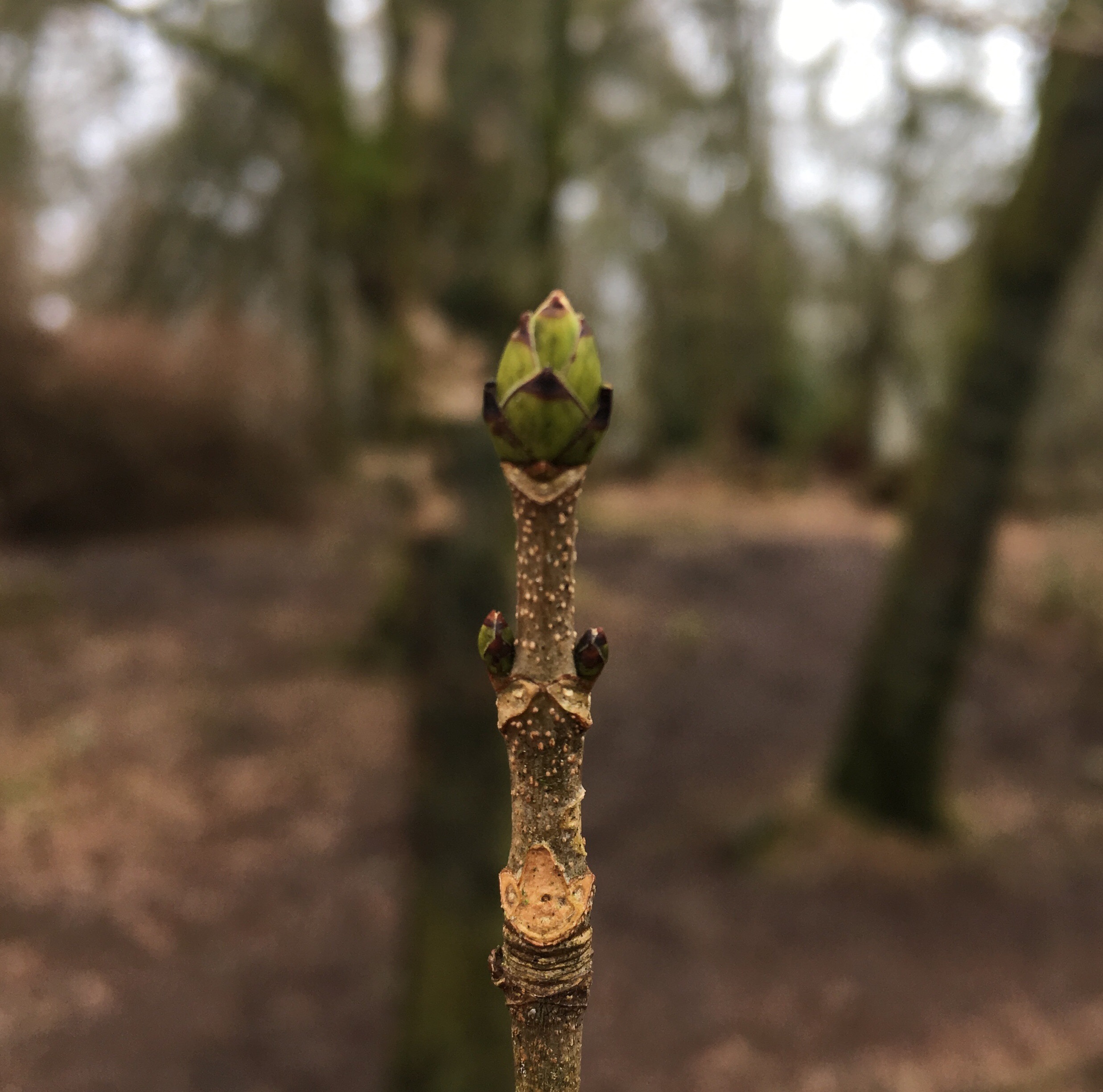
Ash Fraxinus excelsior – Ash trees are quite easy to identify in winter because the buds are big and black. The terminal bud looks a bit like a hoof or perhaps a bishop’s hat. On a mature tree, the ends of the branches curl upwards.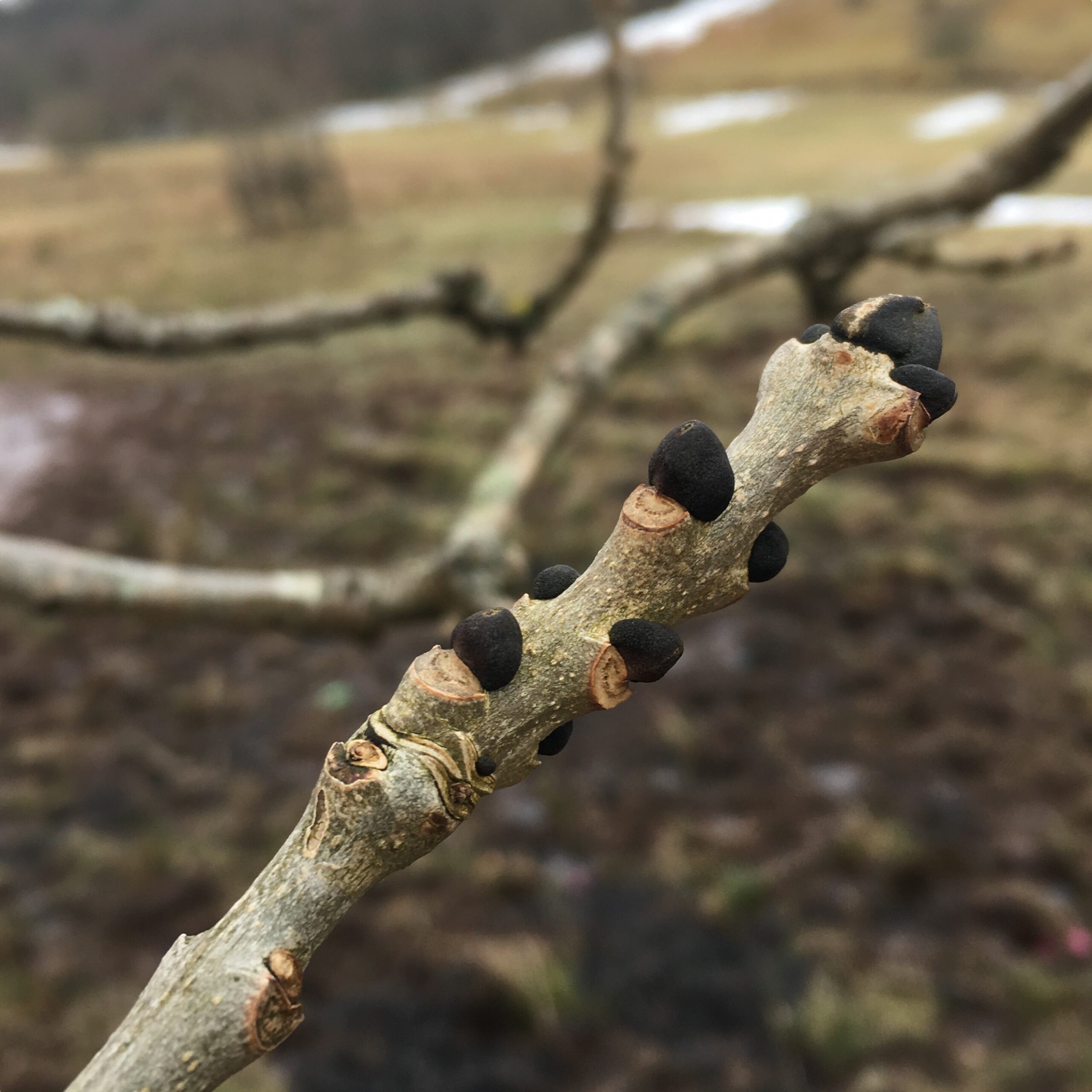
Larch, European Larix decidua – As the Latin name implies, the Larch tree is deciduous. It is the only conifer tree to lose its needles in winter. It is a non-native tree and was introduced from continental Europe in the seventeenth century. The buds are short and stubby. The twigs also have small, round cones on them.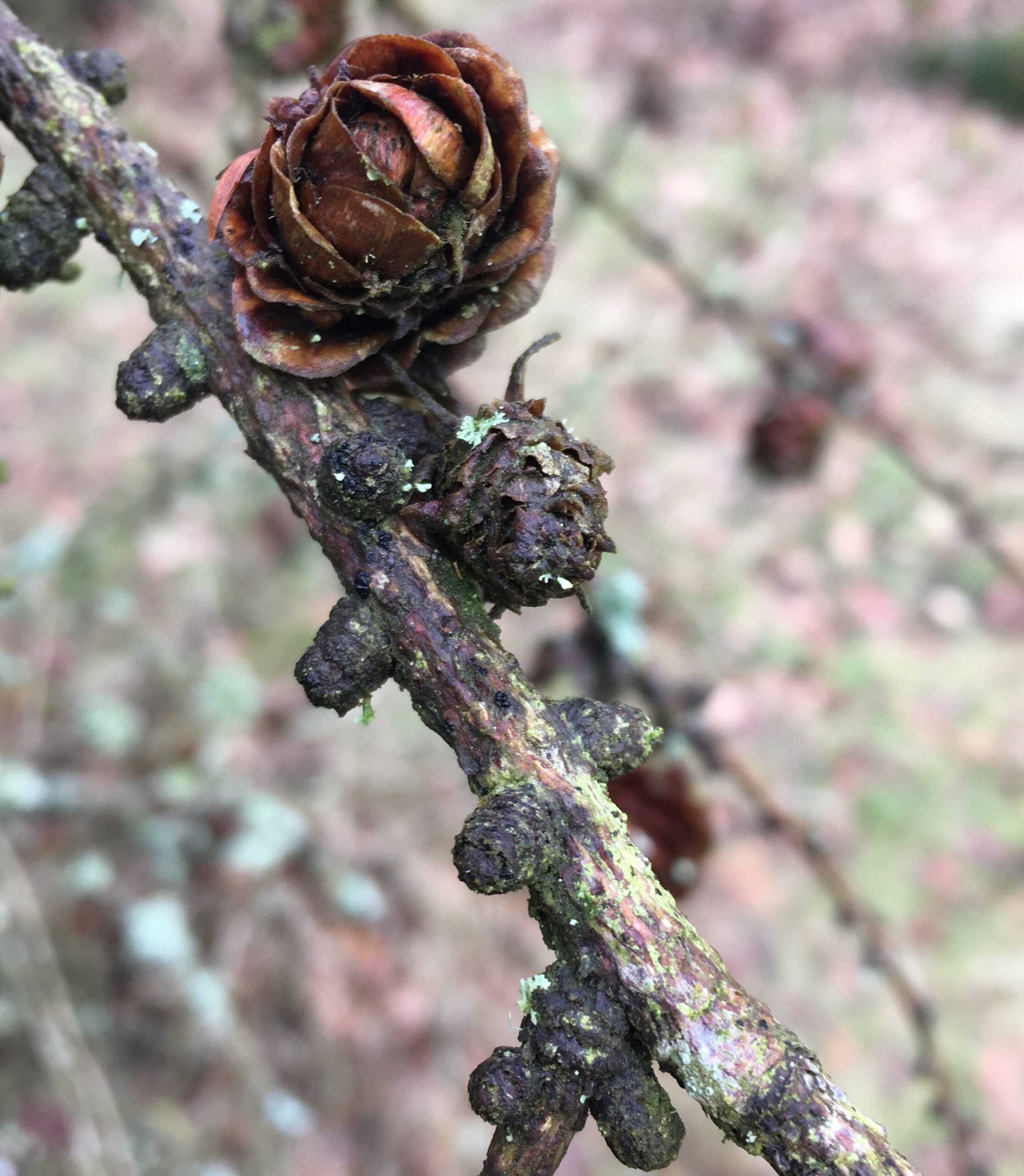
Beech Fagus sylvatica – Beech tree buds are long, slender and spear-like. The tree can be quite easy to identify in winter because the dead leaves often stay on the twigs. The bark of the tree is smooth and grey. Beech tree leaves are poisonous and inhibit the growth of other trees, shrubs and plants beneath it, making beech woodland open and clear and easy to walk through.
Silver Birch Betula pendula – Silver birch buds are very small, greenish-brown in colour, are alternate and have short stalks. The twigs are very fine and snap off easily. The silver birch is quite hard to distinguish from the downy birch. Silver birch twigs are hairless and have little warts on them. Downy birch twigs are smooth and have little hairs on them. Both types of birch tree have catkins.
AspenPopulus tremula – The buds of an Aspen have sharp ends, are scaly and spiral around the twig. The buds are also pressed close to the twig. The twigs have distinctive leaf scars. Aspen’s aren’t very common and are quite hard to find without their trembling, round leaves. 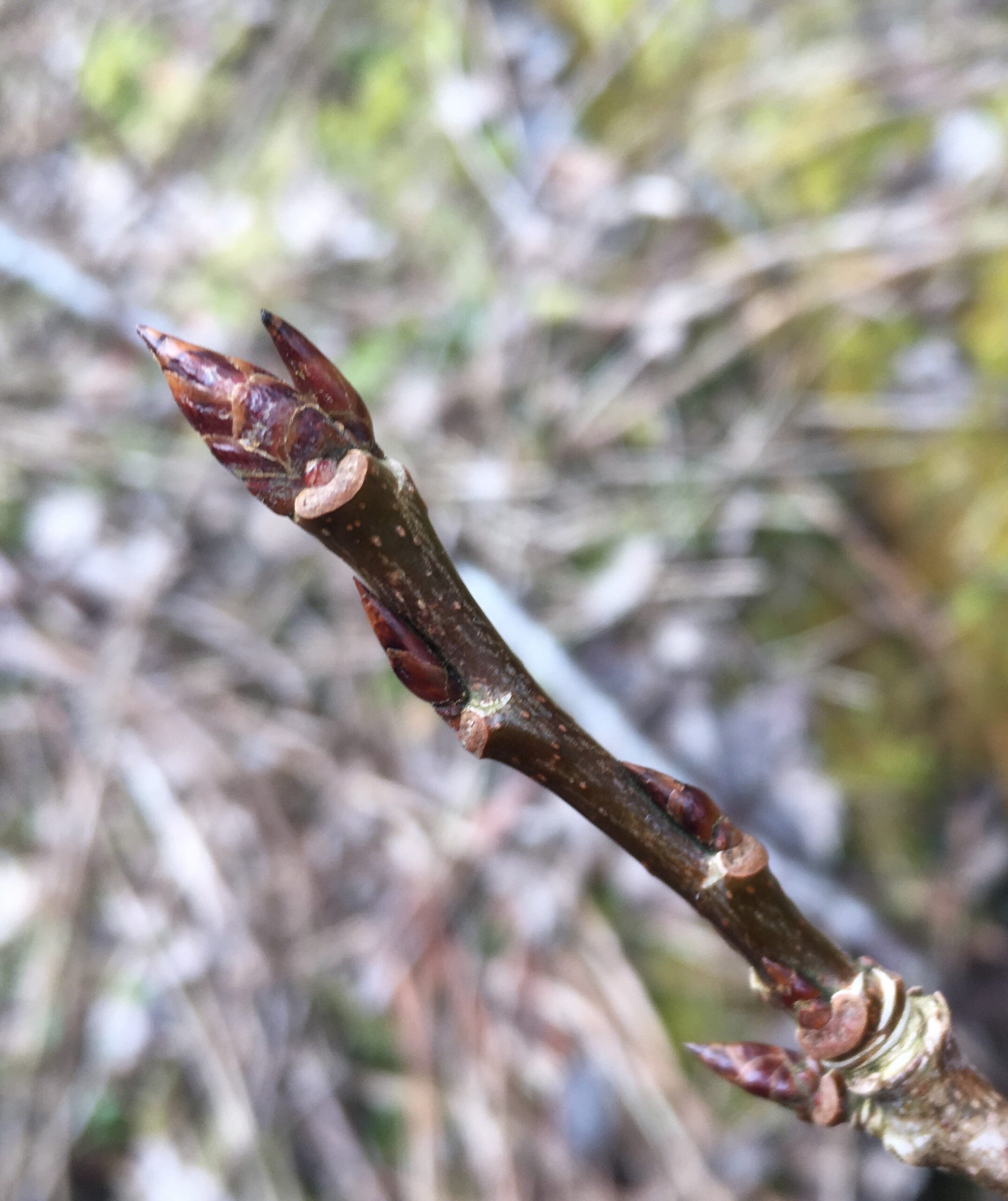
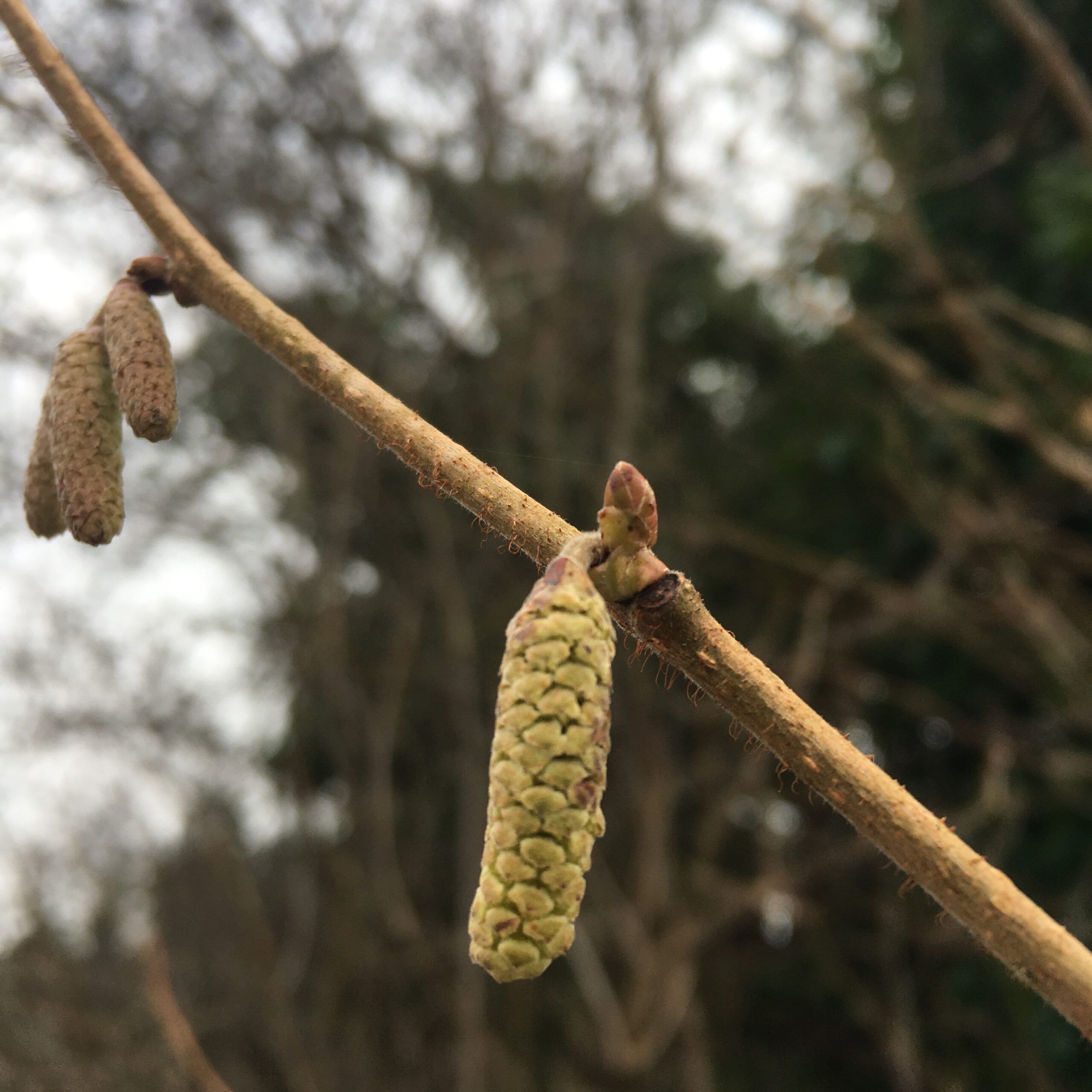
Hazel Corylus avellana – Hazel buds are small, reddish-green and have scales. Hazel trees also have catkins. The shape of the tree is distinctive: it often has multiple branches growing up from the ground. The twigs have little hairs on them as well.
Oak Quercus robur – Oak trees have a cluster of buds at the end of the twigs. The buds are brown in colour and have three scales each. Probably the most noticeable feature of an oak in winter is its fissured bark and knarly, twisted branches. 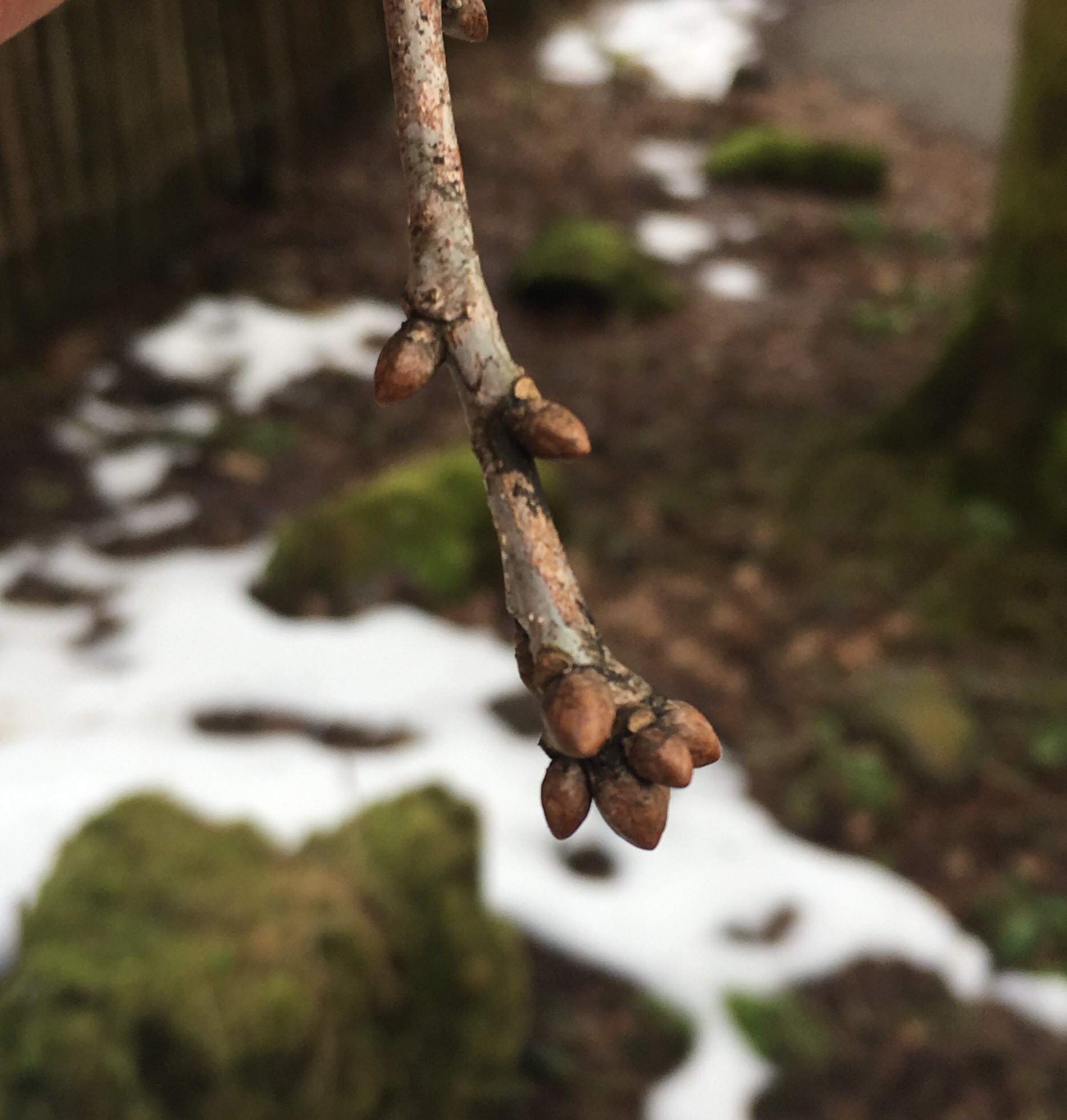
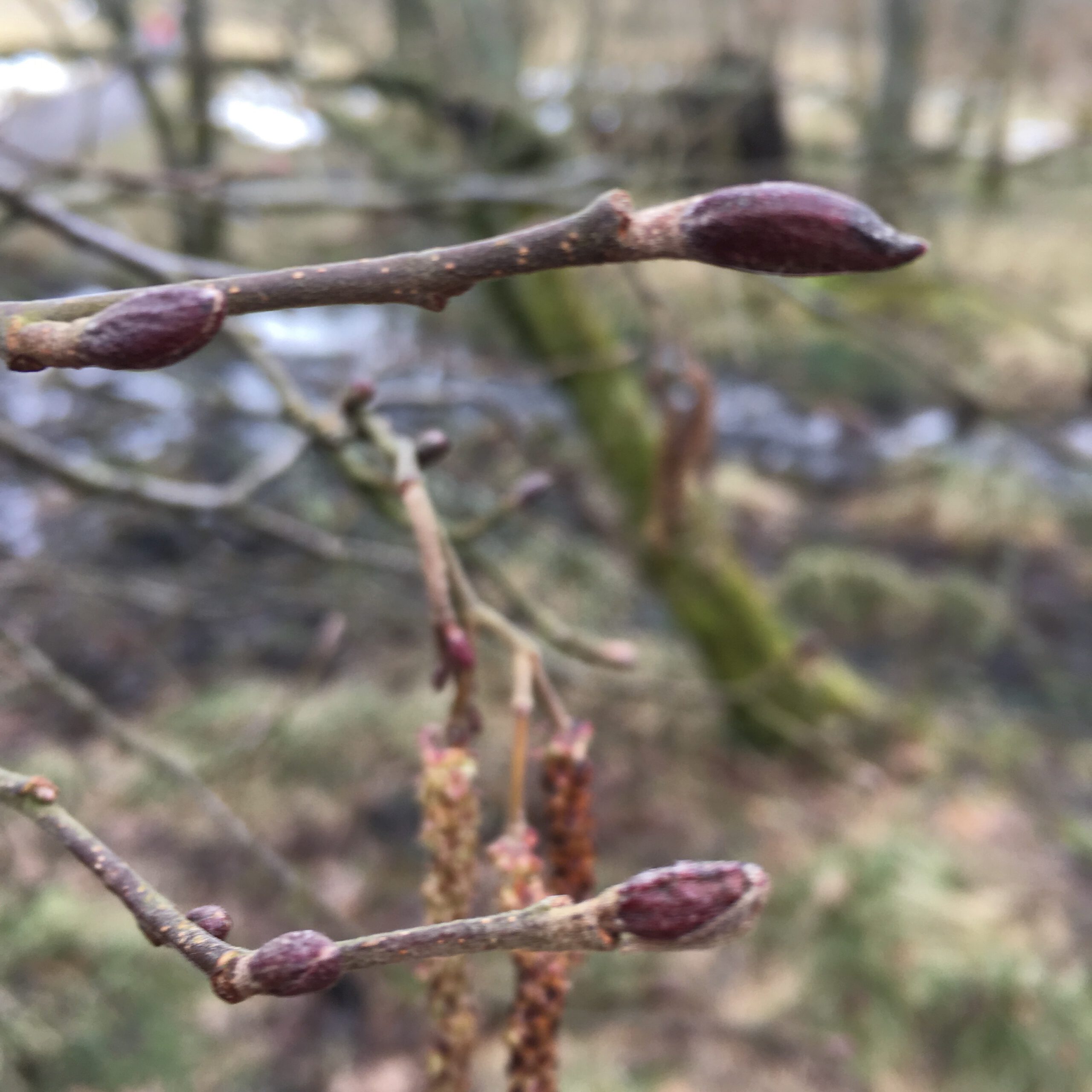
Alder Alnus glutinosa – Alder buds are red with tiny hairs. They look like little boxing gloves. Alders also have catkins and little round cones. They can often be found growing along streams, rivers and wet areas. 
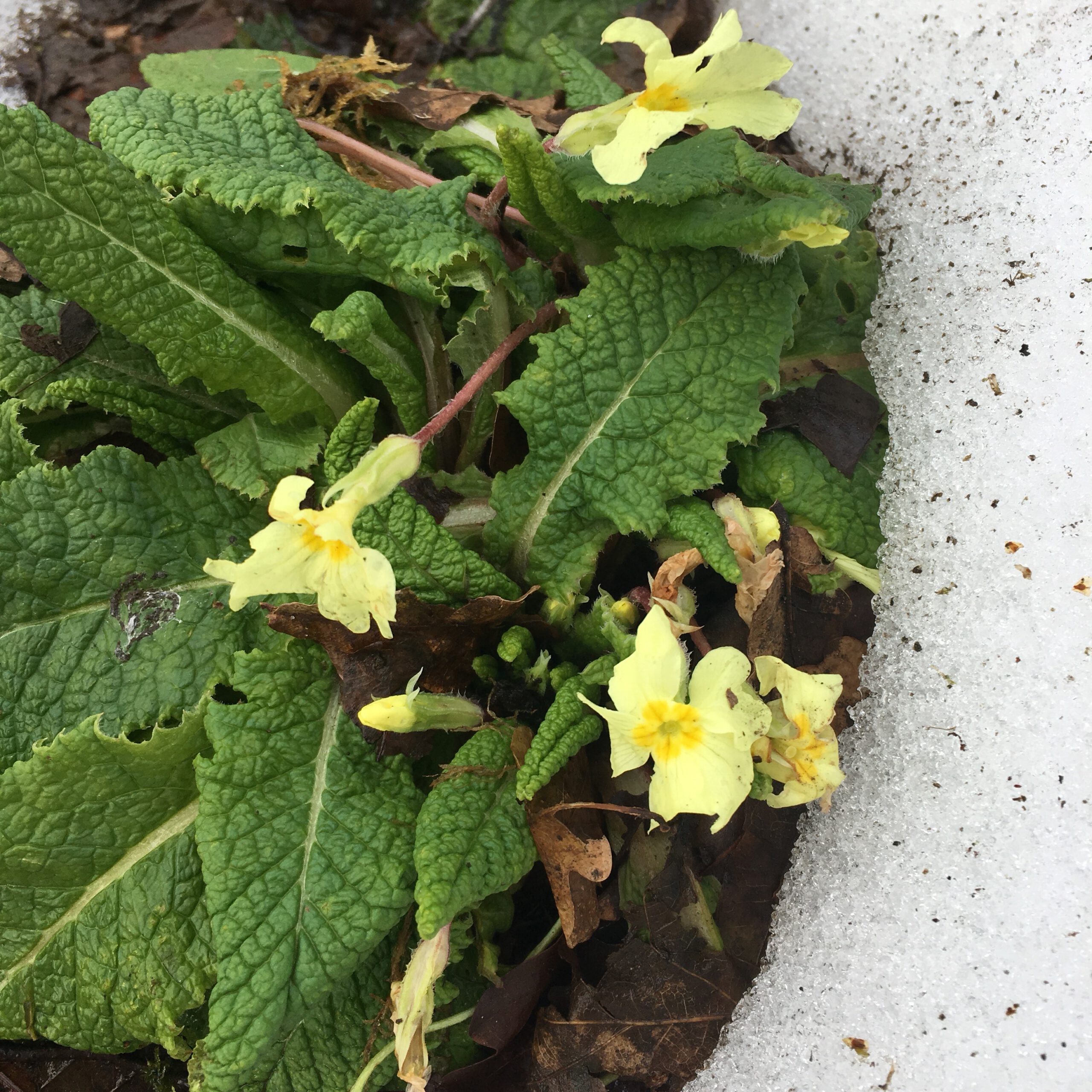
Whilst out at Mugdock today, I also saw primroses and snowdrops, two species of flowers that can be seen in the early Spring.